
HR admin automation: what’s safe and what needs a human
HR automation is safe where the output is a record. Where it is a judgment about a person, a named human signs. Three tiers and the sign-off each needs.
Field notes on documenting how a business actually runs, then handing the repetitive parts to systems that hold up without you.
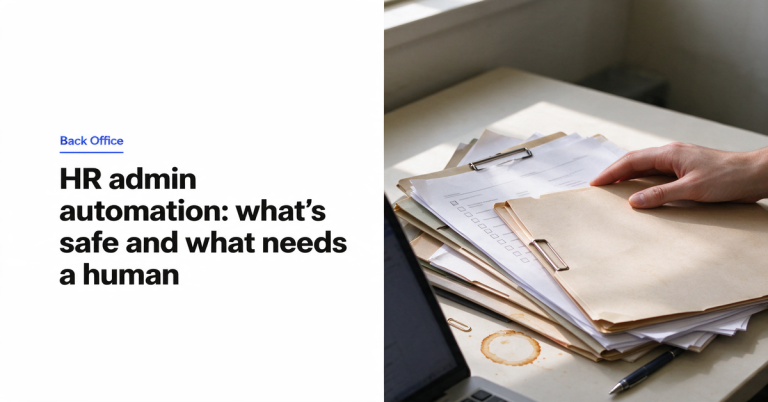
HR automation is safe where the output is a record. Where it is a judgment about a person, a named human signs. Three tiers and the sign-off each needs.
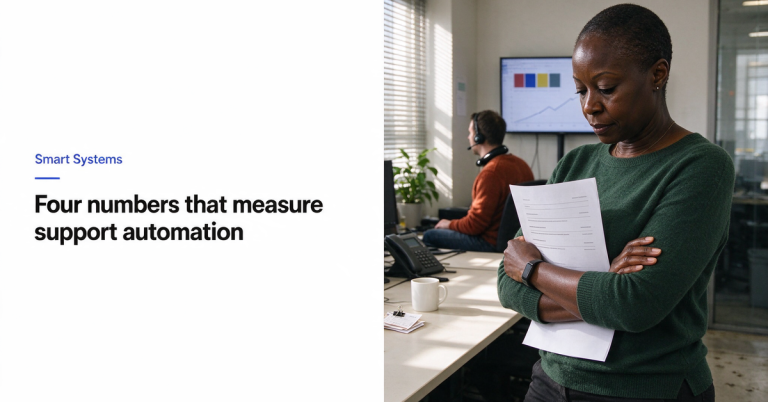
Four customer support metrics, each with a written clock, show whether automation improved service or only sped up a dashboard that hides the answer.
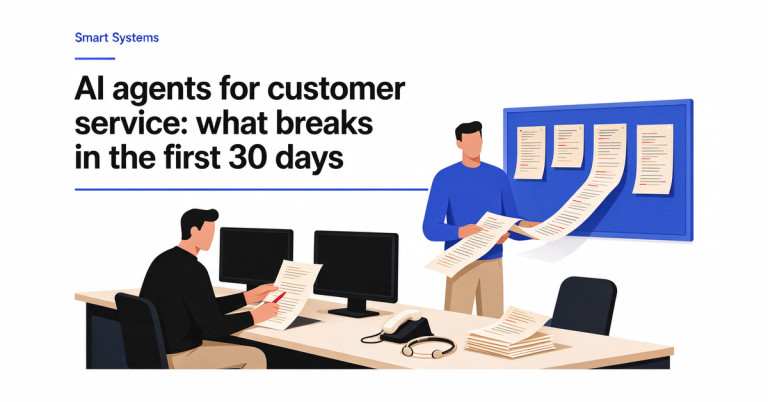
AI agents for customer service fail in five places in month one: what each looks like, why process edges cause them, and a weekly review that catches them.
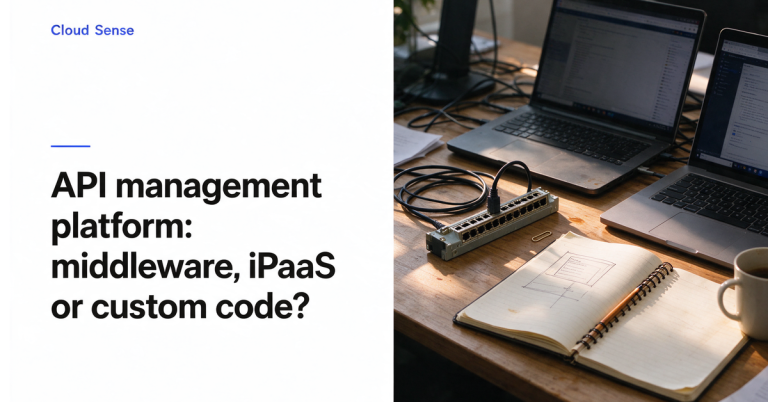
An API management platform compared with iPaaS, middleware and custom code: which route fits, who operates it, and what each unit of work costs.
Proposal software fixes the document, not the two waits that cost days. A six-step teardown of the quote flow and the build order behind a same-day quote.
A process documentation template that survives turnover: eight sections, five templates and three review triggers, plus a handover test that proves it works.
AI consulting for business scoped in a week: the five answers a one-page scope must carry, the exception list that decides the build, and the approver.
Route by machine, reply as a person. The rules that decide which queue a ticket lands in, where automation has to stop, and how help desk software loses the customer’s trust.
One page per metric, seven fields per entry, and the test that tells you a definition is finished. The dictionary that ends the argument over whose number is right.
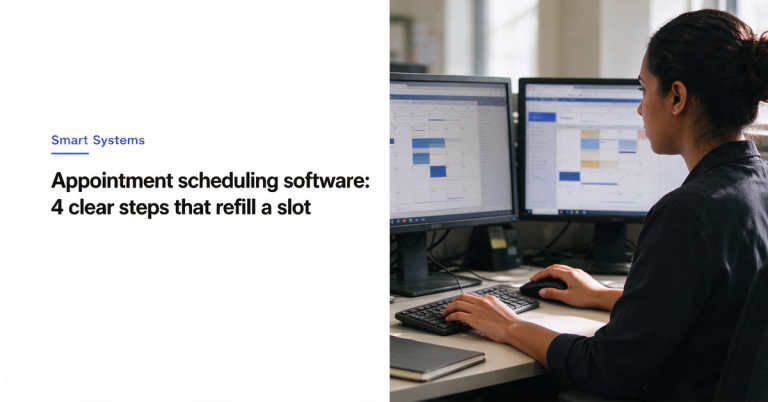
Appointment scheduling software records a cancellation but rarely refills the slot. One-tap rebooking, a single-offer waitlist, timed reminders, an owner.
API integration services: five delivery phases and eight contract clauses decide whether integration survives year two, each with a checkable pass condition.
AI agents for business operations stop where a process stops being predictable. Four edges cause almost every stall, and each one names its own fix.

Where the three days in employee onboarding actually go, and the three changes that bring a new hire from three days to one.
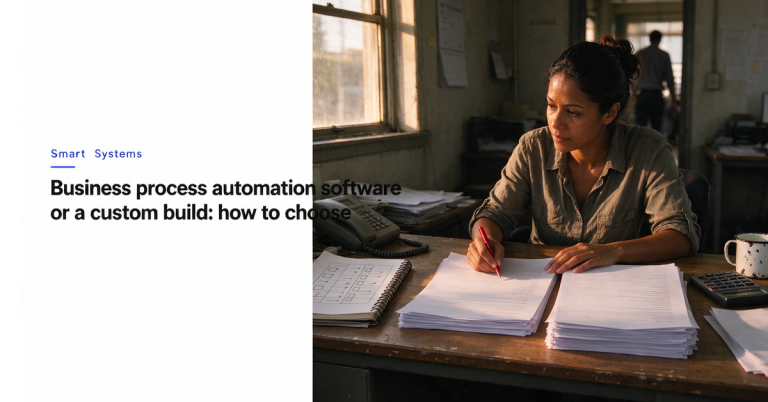
A workflow platform costs less than a build at every volume one process will reach, so the choice turns on rules, variance and systems rather than price.
Five scoping rules that keep an AI chatbot for website support inside its authority, four documented failures, and a twelve-question template for the build.
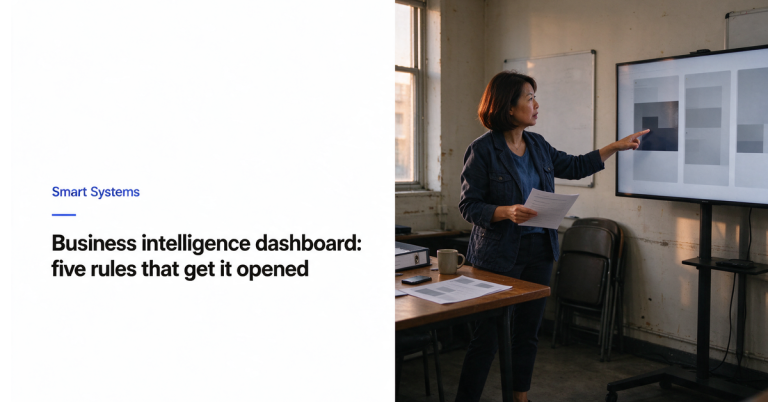
A dashboard goes quiet because of the screen, not the data. Five rules for a business intelligence dashboard that gets opened, each testable in ten minutes.
CRM automation helps when it changes the record and hurts when it reaches the buyer. The four rules to set first, the three settings that cause most complaints, and the seven automations to fix this week.

A school sends five kinds of parent message. Three need a record, two do not, and the routing rule on one page is what keeps the one that matters findable.