API management platform: middleware, iPaaS or custom code?
The short version
- An API management platform governs calls to APIs you already run. It does not connect two systems for you.
- iPaaS is the cheapest way to link two SaaS products and the most expensive way to move millions of records a month.
- Middleware earns its cost when several internal systems need one route and one place to watch.
- Custom code wins on an unusual data model or a high volume. You own the maintenance.
- Decide the integration route first, then decide whether an API management platform belongs in front of it.
Three vendors have pitched you three names for the same job. One sells middleware. One sells an iPaaS subscription. One will write the connector. Each says it connects your systems, and none of them is lying.
They answer one question differently: who operates the link, and what does one unit of work cost? A fourth name usually joins that meeting, and an API management platform does a real job. It is not the job you are describing, which is why the quotes will not sit side by side.
We build custom systems, so we have a stake here. The custom route loses two of these tests in most deals, and this piece says where. By the end you should be able to name your route, and to say why the other two lose.
The short answer
Use iPaaS for a standard, low volume link between two SaaS products. Use middleware when several internal systems need routing, transformation and one place to watch. Write a custom connector when the data model is unusual or the volume is high. Cost of ownership decides between them. An API management platform comes after that decision, not before it.
What the three options actually are
Each label describes a different layer, and each layer has a different person responsible for it at 2am. None of the three is an API management platform, which is often the fourth name in the deck.
iPaaS: connectors you rent by the task
iPaaS means integration platform as a service. You configure rather than code: pick a source app, an event to watch and a destination, and the platform supplies the connector for each side. Microsoft’s Azure Logic Apps advertises more than 1,400 prebuilt connectors (Microsoft Learn). Somebody else wrote the awkward part.
The vendor runs the runtime. You get a builder, a log and a monthly bill.
Middleware: a layer your team operates
IBM’s definition is the plainest one: middleware is software that enables communication between applications or components in a distributed network, the glue that binds systems together (IBM). In practice it is a message queue, an enterprise service bus, or a gateway product your team installs and patches.
The difference from iPaaS is not capability. It is who holds the pager. Middleware runs on infrastructure you control, so it survives a vendor repricing everything, and somebody must own the upgrades.
Custom connectors: code you own
Someone writes an adapter from one system’s API to another’s. You own the code, the deployment and the fixes. It is the only option that can model a data rule no connector anticipated.
It is also the only option with a maintenance bill tied to somebody else’s roadmap. Stripe issues a new major API version twice a year, and each starts with breaking changes (Stripe documentation). A connector built against an API like that carries a date nobody put in the proposal.
API integration tools: what the catalogue covers, and what it does not
A catalogue of API integration tools is a list of apps somebody else decided to support. Read the entries, not the count. Two questions decide whether a listing helps: does the connector cover the fields you need, and who fixes it when the supplier changes an endpoint? Where neither answer is good, you are back to writing code.
Which one fits your integration
Five questions settle it. Run them on your own link and note the first one you cannot answer well. That is the question to carry into the next vendor meeting.
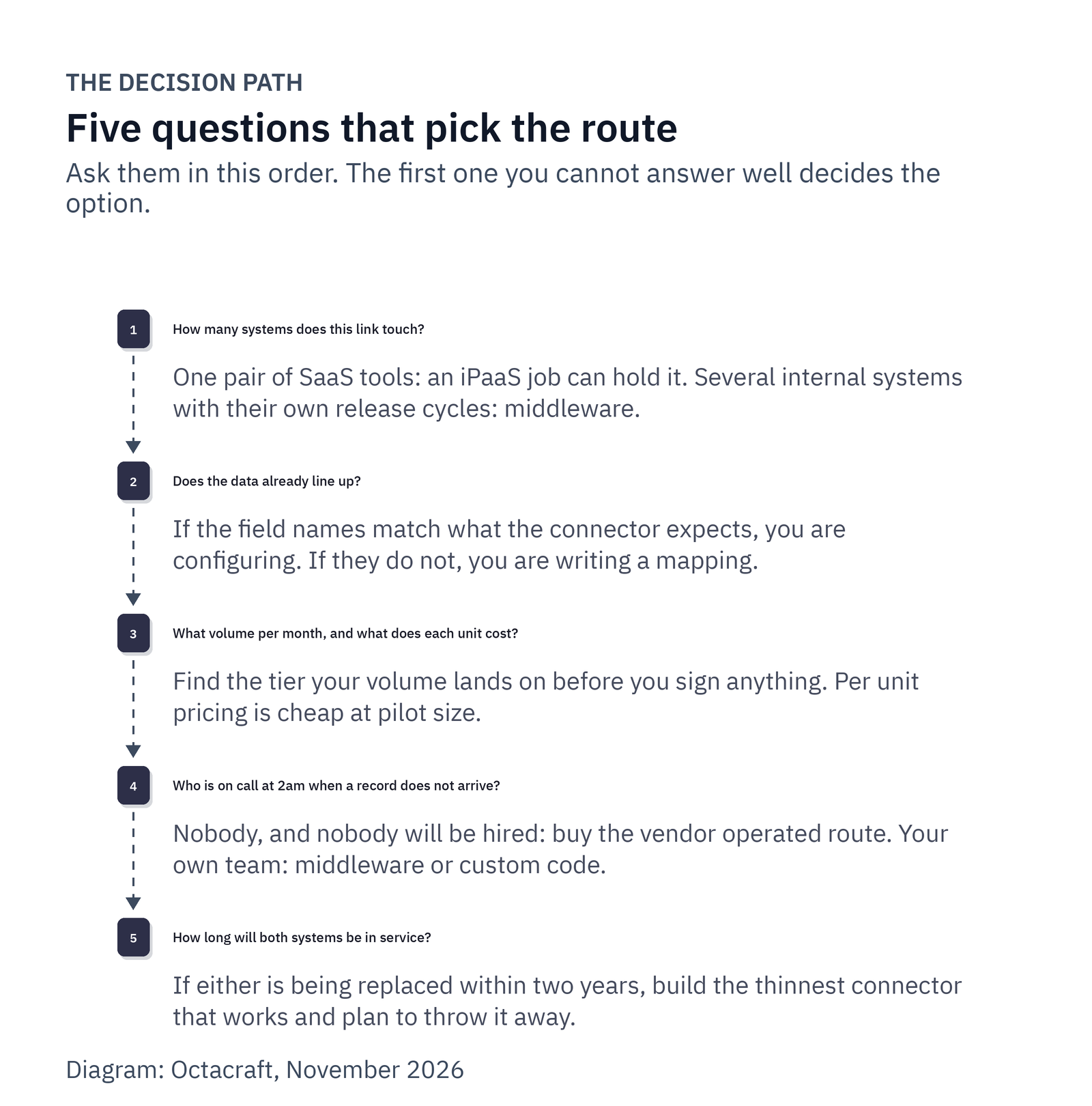
In our delivery work, volume decides more integrations than features do. A link that moves 400 records a day is cheap on almost any tier. The same link at 400 records a minute is a different bill, and the tier card is the only place that shows it.
The second decisive question is the one about 2am. If nobody on your team can be woken for a failed record, the vendor operated route wins by default. Buying what you cannot staff is how a working integration becomes an unowned one.
Notice what the five questions do not ask: which product has the better feature list. None asks whether you need an API management platform at all, because that is a later decision than this one.
What it costs, and what each unit of work is
You cannot compare three quotes until you know what each one meters. iPaaS meters work. Middleware meters capacity. Custom code meters your team’s time. An API management platform meters calls, which is a fourth bill that rarely makes the spreadsheet.
Zapier publishes a free tier of 100 tasks a month and a paid plan from $19.99 a month (Zapier pricing). A task is any successful action, so five action steps spend five tasks per record (Zapier help).
At the gateway layer the unit is the call. Amazon API Gateway charges $3.50 per million REST requests for the first 333 million in a month, and $1.00 per million for HTTP APIs (AWS pricing). Its own worked example puts five million REST calls at $17.50. An API management platform usually wraps that metering, and it stays trivial until volume is large.
Middleware is priced against capacity, and the unit differs by vendor: cores, messages, connections or named users. An API management platform tends to bill per call or per hour, so it is the easiest of the four to forecast.
Custom code has no meter. It has a build cost and a maintenance cost, and the maintenance cost gets left out of the business case. Our line-by-line account of what custom software costs is the closest thing we publish to a price list.
| Route | What you pay for | Who operates it | Where it fits | Fails first at |
|---|---|---|---|---|
| iPaaS | Tasks, operations or records, metered monthly | The vendor | Standard links between two SaaS products | Volume: the bill climbs as the link gets busier |
| Middleware | Capacity on a license: cores, messages or connections | Your team | Several internal systems needing one route and one monitor | Ownership: nobody is left who can upgrade it |
| Custom code | A build, then maintenance and on-call time | Your team or a supplier | Unusual data models and high volume | Change: the supplier’s API moves and you patch it |
API management platform: does it replace any of these?
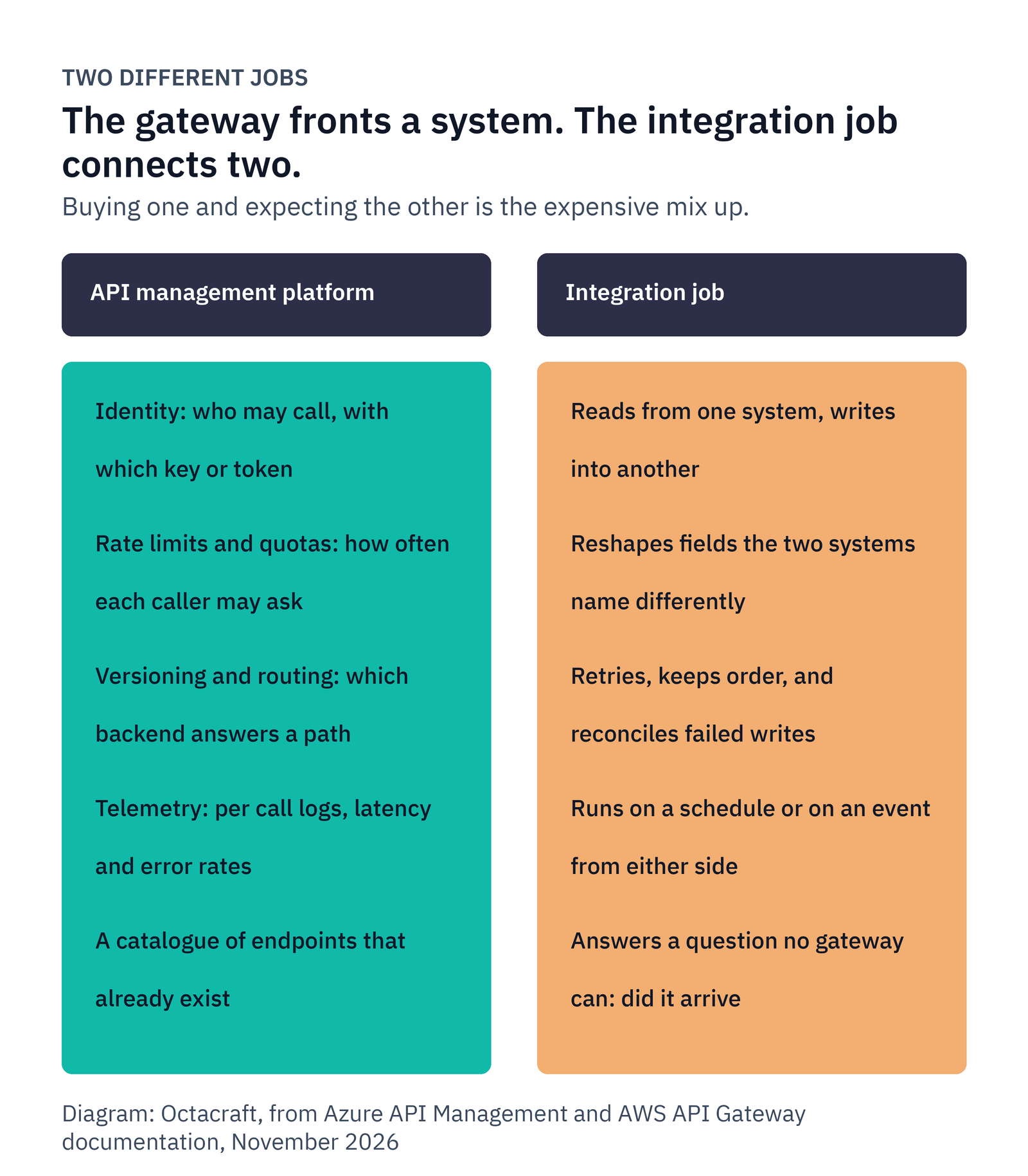
No. An API management platform governs traffic to APIs that already exist: who may call, how often, and what the call did. It sits in front of a system you run. Moving data between two systems is a separate job.
API management: the jobs a gateway actually does
Microsoft splits an API management platform into three parts: a gateway, a management plane and a developer portal (Microsoft Learn). Inside it, the gateway proxies requests, applies policies and collects telemetry (gateway overview). That list is the job description: authentication, rate limits, versioning, monitoring and a catalogue of endpoints.
Nothing in it moves a record between systems. An API management platform is a doorman, not a courier.
What to put behind the gateway first
If you buy an API management platform, put behind it the API you are least willing to lose: the one partners call. One endpoint, not twelve. A quiet internal endpoint behind a platform you do not need yet adds a component whose failures you now debug.
Do I need an API gateway for one integration?
Usually not. For a single link, a gateway adds a component to run and one more place for a call to fail. An API management platform earns its place when you expose APIs to partners or several teams, or need per caller keys, quotas or versions. Until then, monitor the integration itself.
The demo will show it doing things your link does not need. Ask what an API management platform would do here that the integration cannot do alone. If the answer is nothing yet, waiting is the honest position.
The license is rarely the expensive part of an API management platform. The policies, the configuration and the person who owns them are.
What is the difference between middleware and iPaaS?
iPaaS is a hosted service where you configure connectors and the vendor runs the runtime. Middleware is software your team installs and operates, with routing, transformation and monitoring you control. Neither one is an API management platform. That product governs APIs you already expose. These two move data.
The difference shows up in the budget. With iPaaS the recurring cost grows with volume. With middleware it is a license plus the salary of whoever owns it. A team of two cannot absorb the second.
When each option fails in year two
All three work in the pilot. The failure arrives later, and each route has its own version of it. An API management platform has a fourth: a gateway nobody repointed when a backend moved.
Connector deprecation and customization limits
The connector you picked because it covered your fields gets rebuilt, or the supplier changes an endpoint and the listing goes stale. You do not control that timeline. The gateway half of an API management platform has the same exposure: a policy that still points at an old host. Keep a short list of the connections the business depends on, and check the changelog when something stops.
Per task pricing at volume
Per unit pricing punishes success. A workflow that runs more often because the business grew costs more each month, and nobody changed anything. Price the tier you expect in year two. The same arithmetic hits an API management platform that bills per call: double the traffic, double the line.
An unowned middleware layer
Middleware bought and not staffed is the most expensive failure of the three. The license renews, the layer keeps routing, and nobody upgrades it. When it stops, the person who built it has left. Name an owner when you approve the purchase.
If you have no team, what you are buying
Plenty of 200 person firms have two people who can run infrastructure and nobody who can own an integration. The question then changes from which product to which supplier.
API development and integration services: what outsourcing buys
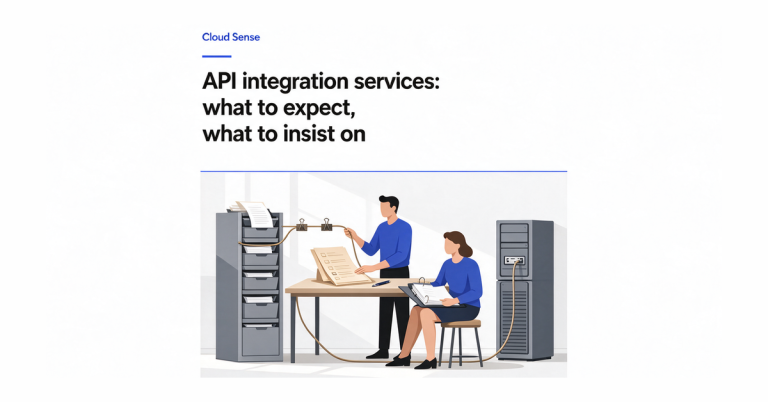
You are buying somebody who has done the mapping before, plus a warranty. What you are not buying, unless it is written down, is the monitoring after go live. We set out the clauses worth insisting on in our API integration services checklist. If that supplier also runs an API management platform for you, ask which layer they answer for when a call passes the gateway and the record still never arrives.
Custom API integration services: the terms that decide year two
Three terms matter more than the price. Who holds the credentials. Who is told when the flow stops, and how quickly. What happens to the code if the relationship ends. A custom API integration services contract that leaves those open moves the risk to you in the year it matters.
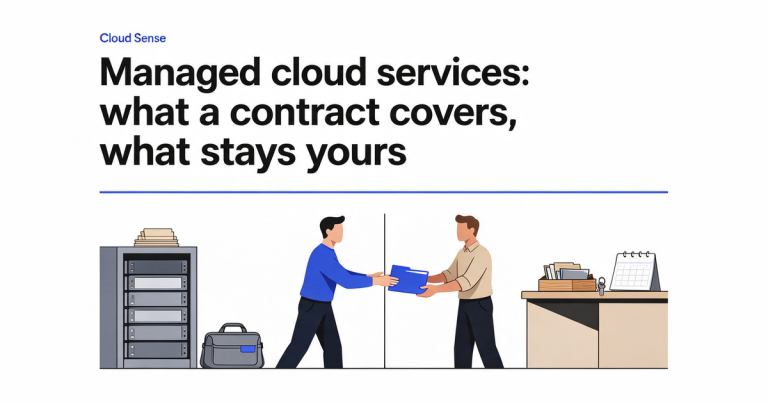
Our notes on what a managed cloud services contract covers are a useful cross check before you sign both.
How to run a two-week pilot
Scope one integration, one direction, one field set. Run it beside the manual process for two weeks and count exceptions. The pilot worked when you know three numbers: how often the link failed, how long a failure went unnoticed, and what the month cost.
If part of the purchase is an API management platform, put one endpoint behind it during the pilot and leave the rest where they are. If the pilot ran on a free tier, say so in the write-up. A pilot that costs nothing tells you nothing about the bill.
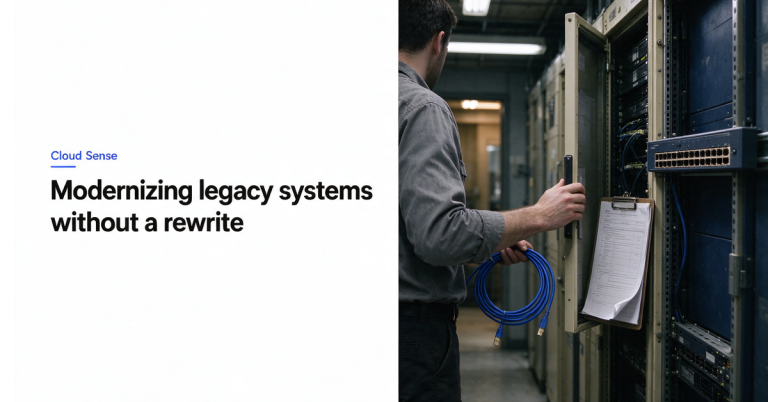
Legacy systems are where pilots go wrong most often, because half the field mapping turns out to be a cleanup job. Our notes on modernizing a legacy system without a rewrite cover the work that happens before any connector is configured.
Who should pick what
Pick iPaaS if the link joins two standard SaaS products, the volume is modest, and nobody on your team wants to own an integration.
Pick middleware if five or more internal systems must share data, if the transformation rules are yours to control, or if one place to watch them all matters more than the license.
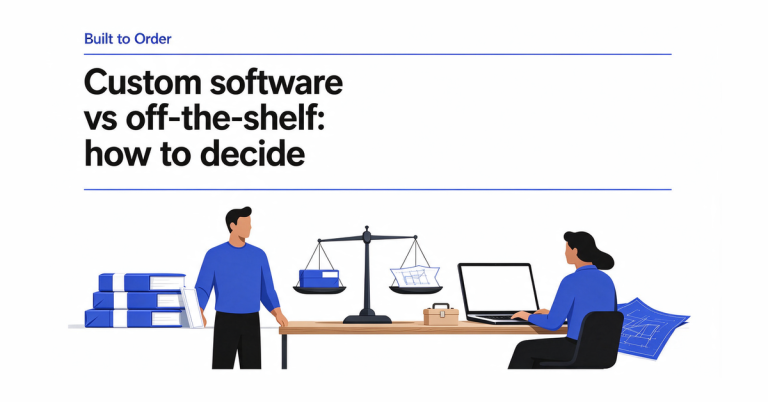
Pick custom code if the data model is unusual, the volume is high, or the integration is the product rather than the plumbing. Our comparison of custom software and off the shelf software runs the same trade at the application level.
Add an API management platform only if partners or several teams call the same API and you need keys, quotas or versions managed in one place. Pick nothing if both systems will be replaced inside a year. A manual step that costs an hour a week is cheaper than an integration nobody maintains.
Where we fit
We build custom systems and connectors, so the custom route is the one we sell. We do not sell an API management platform, and it is rarely the first thing a client needs. The custom route is the wrong answer for two of the questions above. If your link joins two SaaS products at modest volume, an iPaaS subscription will cost less than our first week.
The work we take is the link no connector covers: an unusual data model, an old system with a strange API, or a volume that makes per unit pricing look absurd. Our build or buy guide sets out that test, and it is the one we run on our own proposals.
Questions we get asked
Which option is cheapest to start?
iPaaS, almost always. Zapier’s cheapest paid plan is published at $19.99 a month, and a first connector takes days rather than weeks. A cheaper start is not a cheaper fifth year, which is why the unit price matters more than the entry price.
Who should own a custom connector?
Your firm should hold the repository, the credentials and the deployment. A connector you cannot read is one you cannot replace, and the supplier who built it may not be around in year three.
Is an API gateway the same as an API management platform?
No. The gateway is the runtime part that proxies calls, applies policies and collects telemetry. An API management platform is the whole product: that gateway plus a management plane for configuration, and usually a developer portal. A gateway alone is fine when configuration is managed elsewhere.
If you are holding two quotes for the same integration, or one iPaaS tier against a custom build, send us the brief with the model you are leaning toward. We will reply with the route we would take, and the parts we would not.
Philip Bassey is Octacraft’s Chief of Staff. He oversees the interdepartmental work that keeps our delivery and operations documented, and writes about the decisions buyers face before a system is built.

Philip Bassey is Chief of Staff at Octacraft, where he oversees the interdepartmental activities that keep our processes documented and the ones worth publishing published. He writes about operations that are engineered into systems instead of held together by memory.